Rev A · 500 × 350 × 400 · Dielectric
The quietest way to cool a computer.
A sealed acrylic bath. Motherboard and GPU fully submerged in mineral oil. Heat leaves through a closed radiator loop — not a case fan.
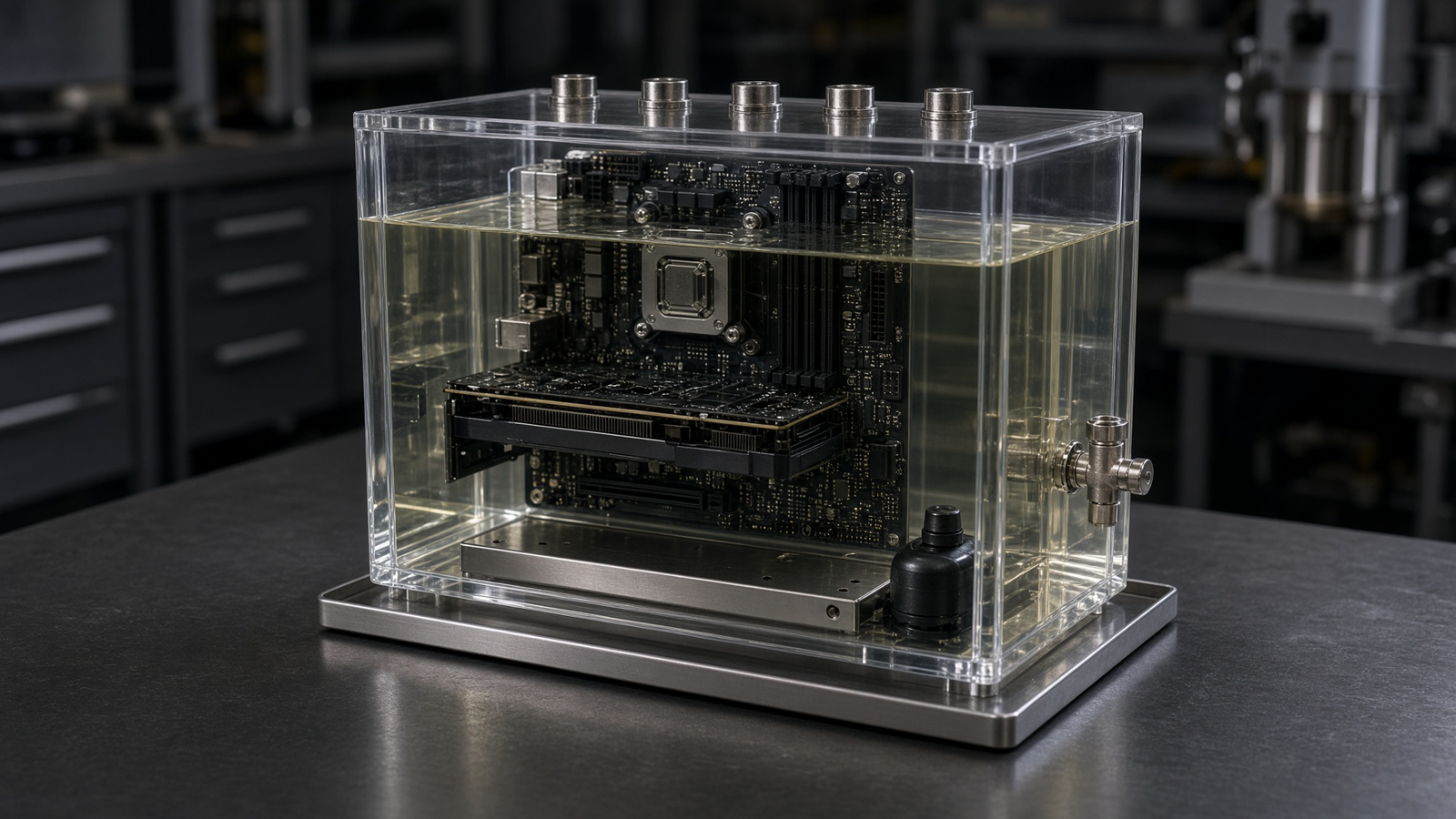
- Envelope
- 500 × 350 × 400 mm
- Fluid
- Mineral oil, dielectric
- Viscosity
- 4–8 cSt
- Wall
- 5 mm acrylic
- Glands
- M16 × 1.5
Orthographic · 1 : 5
The drawing
Front, side, and top — as specified. Select a callout to read the part.
Closed loop
Hot oil out. Cool oil home.
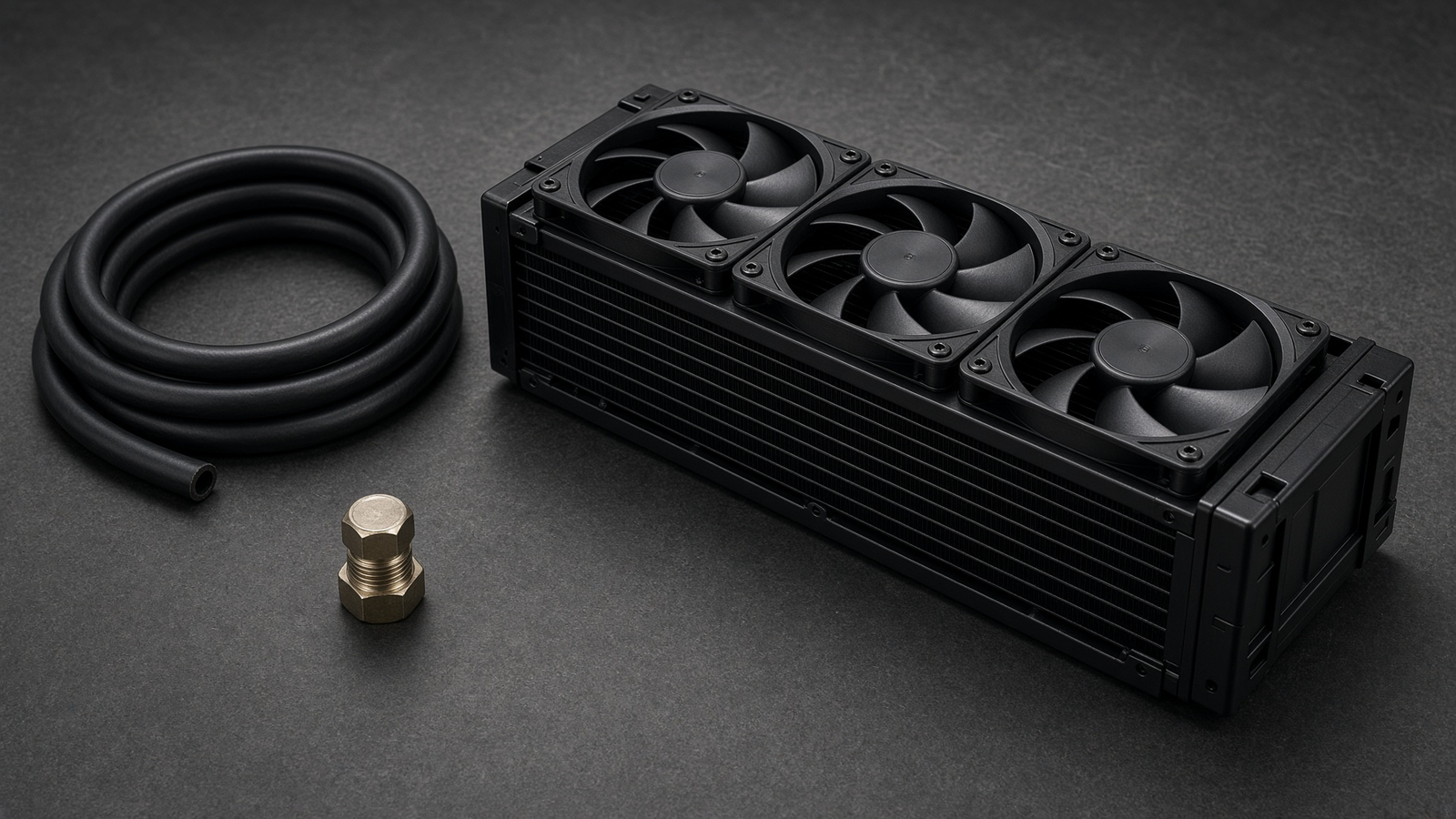
The pump sits on the tank floor. It sends the warm surface oil to a 240 or 360 mm radiator, then returns the cooled stream through a bottom diffuser so the bath stays stratified and quiet.
- Hot oil — taken from the top of the tank, where heat rises.
- Cool return — diffused at the floor so it does not short-circuit the radiator.
Bill of materials
Fourteen parts. One bath.
| No. | Part | Spec | Note |
|---|---|---|---|
| 1 | Clear acrylic tank | 5 mm wall, solvent cemented, sealed | Optically clear cell. Pressure-tested to 0.1 bar. Envelope 500 × 350 × 400 mm. |
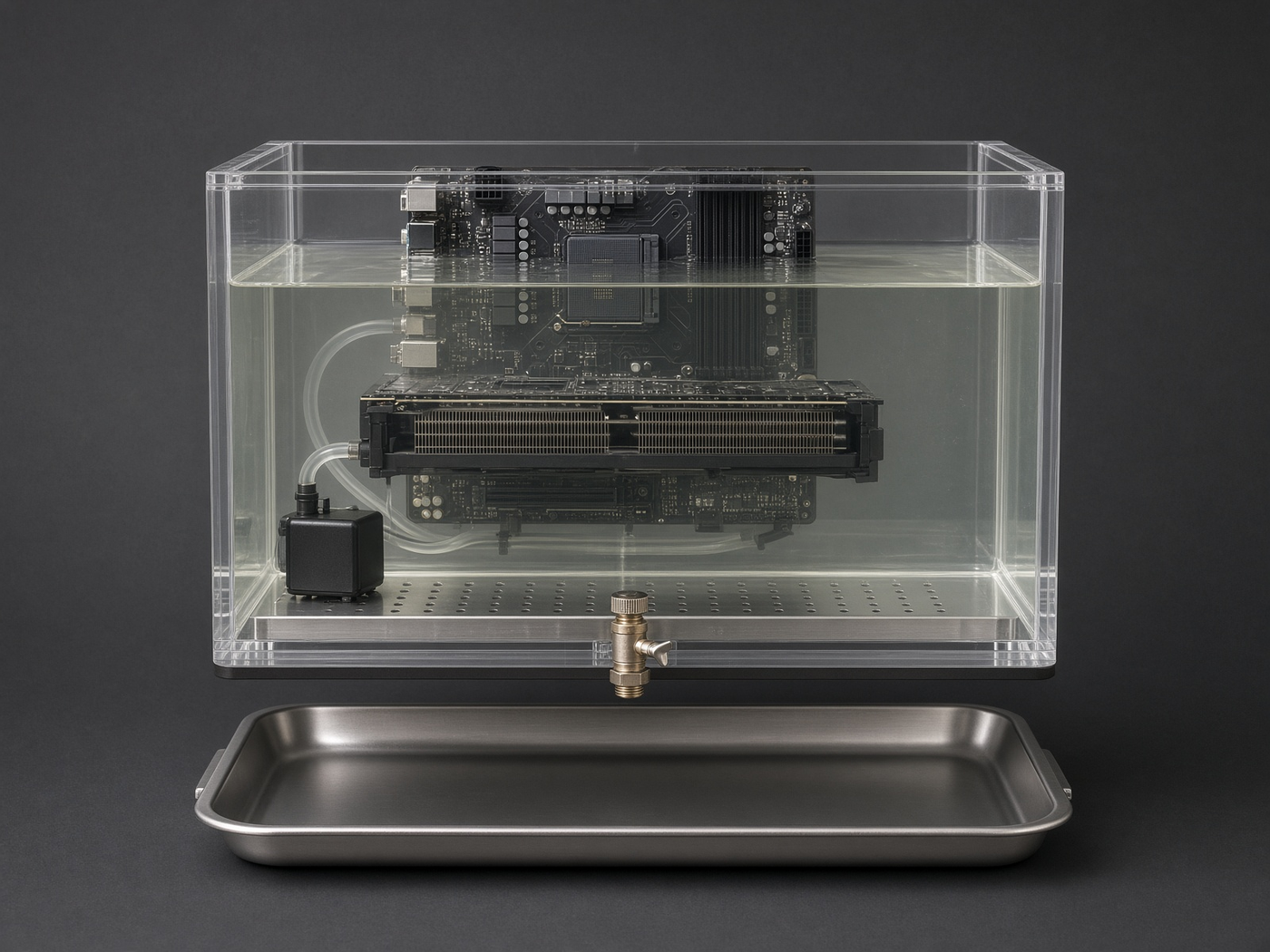
| 2 | Component mounting tray | SS304, removable | Lifts the board stack off the floor so oil can circulate under the tray. |
| 3 | Motherboard | Fully submerged | ATX / mATX on standoffs. No case fans. CMOS battery stays in oil. |
| 4 | GPU | Fully submerged | Air cooler becomes a heatsink in oil. Dual-slot cards fit the 350 mm width. |
| 5 | Dry bulkhead panel | On lid | Keeps power and I/O above the oil line. Glands pass only through this panel. |
| 6 | Sealed cable glands | M16 × 1.5 typical | Power IEC C14, USB 3.0 Type-A, DisplayPort ×2, Ethernet RJ45, aux / sensor. |
| 7 | Submersible pump | Bottom of tank | Pulls hot oil from the top return and drives the external radiator loop. |
| 8 | Temperature sensor | Oil bath | Probe in the oil, not on a heatsink. This is the control temperature. |
| 9 | Fill / drain valve | Bottom, 1/4″ BSPP or NPT | Nickel-plated brass or stainless. Used for first fill and oil changes. |
| 10 | Level sensor | Optional | Float or optical. Alerts if the oil line drops below the GPU. |
| 11 | Secondary spill tray | Stainless or powder-coated | Catches drips when the lid is off. Required — mineral oil is stubborn. |
| 12 | Radiator | 240 mm or 360 mm | External. Oil-to-air. Sized for the board TDP, not case airflow. |
| 13 | Radiator fans | 120 mm × 3 | The only moving air in the system. Run them slow; oil already did the work. |
| 14 | Radiator bracket | Mounting hardware | Holds the radiator off the desk, independent of the tank. |
6a
Power
IEC C14
6b
USB 3.0
Type-A
6c
DisplayPort
2×
6d
Ethernet
RJ45
6e
Aux / sensor
Bulkhead
Steady-state model
What the oil actually does.
A 70 L cell, about 12 L displaced by hardware. Mineral oil at 0.83 g/cm³ and 1.67 kJ/kg·K. Heat leaves through the radiator, not the acrylic. This is a first-order UA model — use it to size the loop, not to certify a warranty.
- Oil
- 44.6°C
- GPU skin
- 56.6°C
- CPU IHS
- 52.6°C
- ΔT oil
- 22.6 K
UA ≈ 18.6 W/K · oil mass 48.1 kg · ~72 min to near-steady from a cold fill. GPU assumed +12 K over bath.
Field notes
How to live with it.
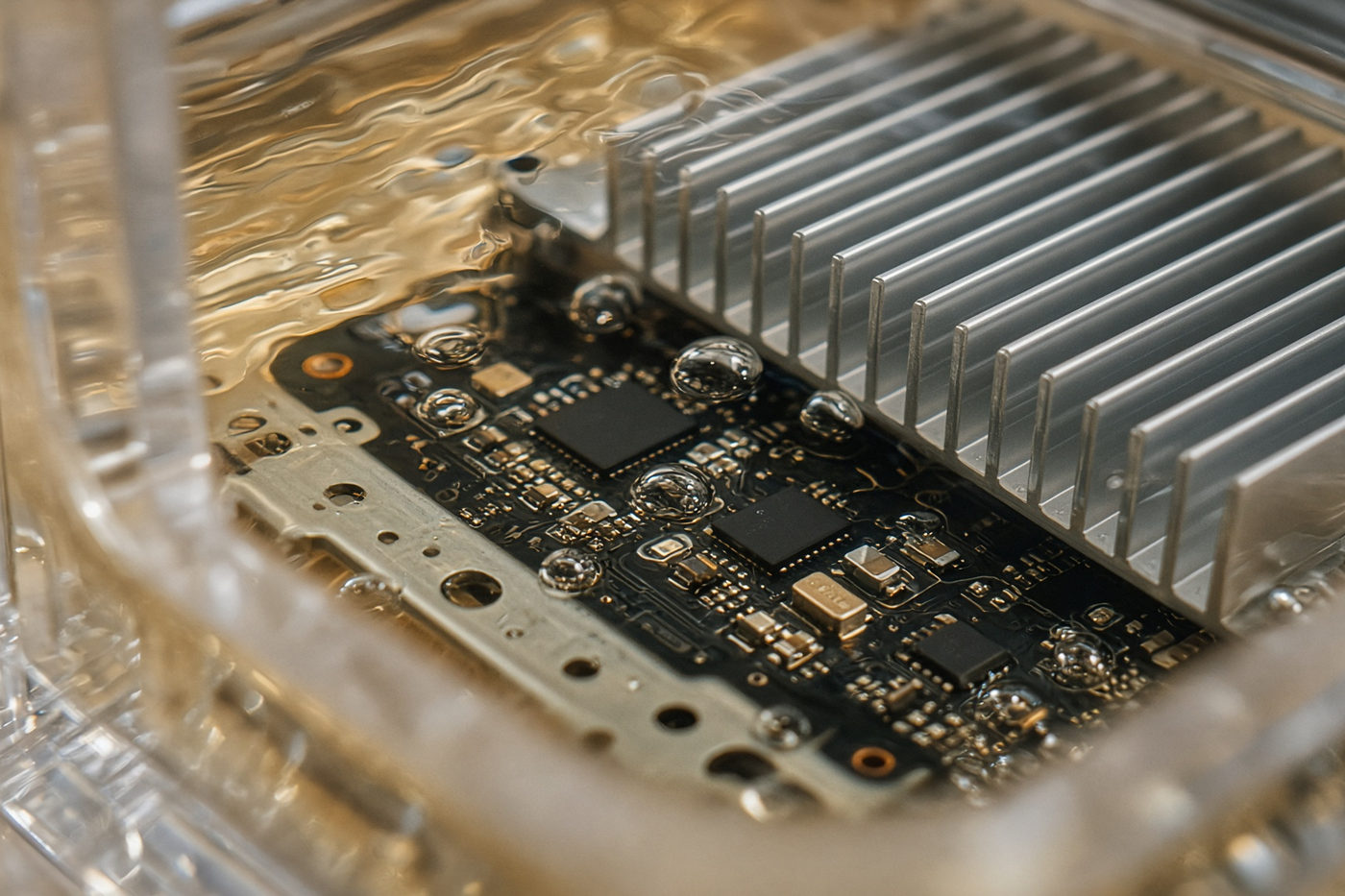
- 1All components fully submerged in mineral oil (dielectric, non-conductive).
- 2Use food-grade or PC-grade mineral oil. 4–8 cSt viscosity recommended.
- 3Acrylic tank: optically clear, solvent cemented, pressure-tested to 0.1 bar.
- 4All fittings: 1/4″ BSPP or 1/4″ NPT, nickel-plated brass or stainless.
- 5Routine maintenance: check oil level. Filter or change every 6–12 months.
- Fittings
- 1/4″ BSPP or NPT
- Radiator
- 240 / 360 mm
- Fans
- 3 × 120 mm
- Proof
- 0.1 bar
- Scale
- 1 : 5
Revision A · limited
Reserve a tank.
Sign in and leave a note — board, GPU, room ambient. We build to the drawing. No deposit on this page.
Sign in with Google or X to hold a build slot.
Sign in to reserve